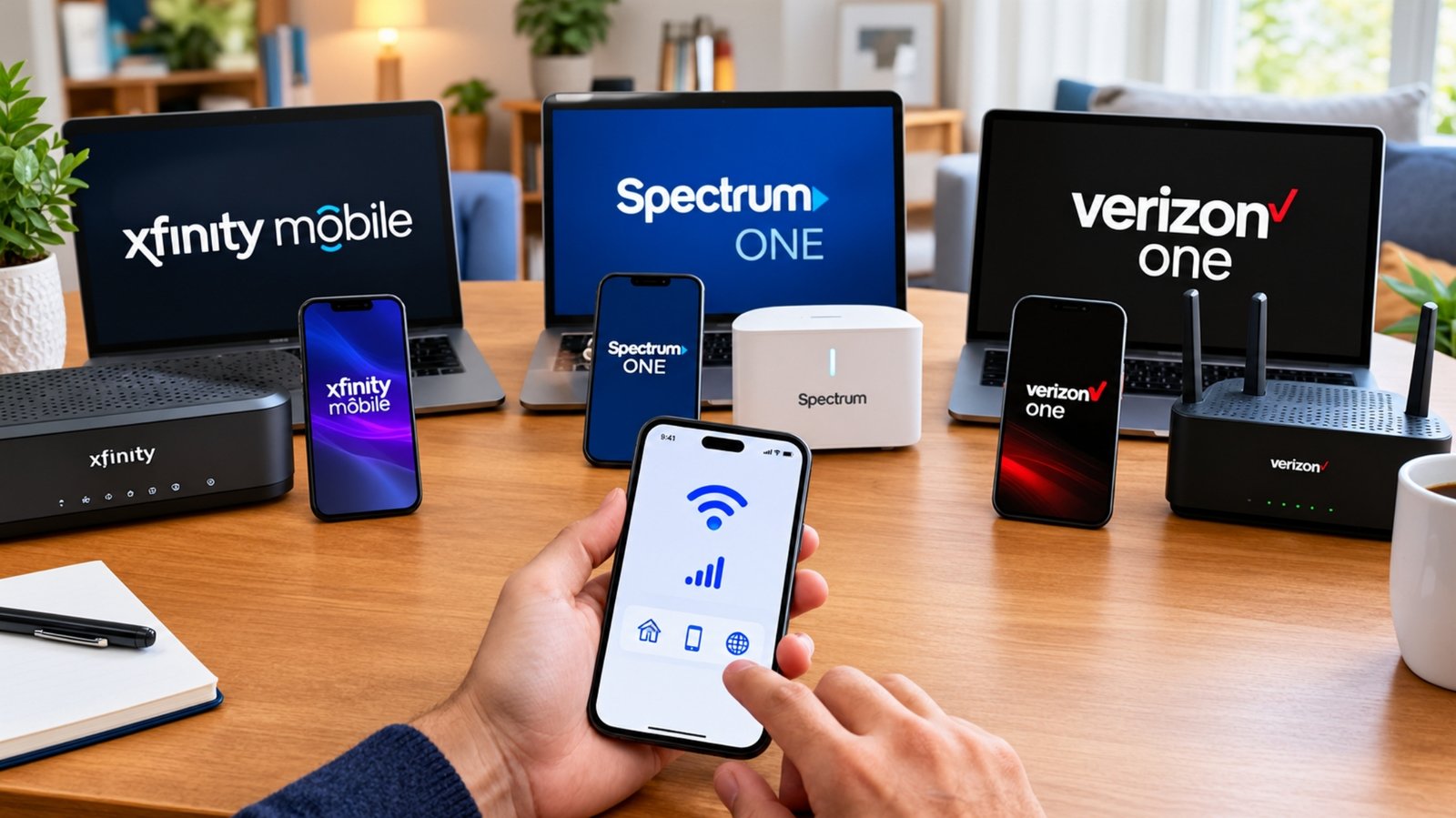


You’ve seen the ad: “$30/month internet!” It looks great — until month 13 rolls around and your bill quietly jumps to $65. That’s a promo rate, and for years it was just how the internet business worked. You’d get a sweet first-year price, then pay full freight after the discount expired.
The good news for 2026: that’s finally changing. Pushed by fiber and 5G competition, big providers now compete on price stability, not just a low teaser rate. T-Mobile, Xfinity, and Optimum lock prices for a full five years. Verizon and Spectrum lock for three. But here’s the catch — not every “guarantee” is a real price lock, and true “price for life” deals are rarer than the marketing suggests. Let’s sort out what’s real.
TL;DR — Quick Answer
Price Lock vs. Promo Rate: What’s the Difference?
They sound similar, but they’re opposites. One protects you for years. The other protects you for about twelve months and then bites.
True Price Lock
- Your monthly rate is frozen for a set number of years (2–5, or “for life”)
- No surprise jump after year one
- Often includes equipment in the price
- Best ones follow you when you move
- Easy to budget around
Temporary Promo Rate
- Low price for ~12 months only
- Jumps to “regular price” after — sometimes nearly double
- Equipment rental often added on top
- You have to call and renegotiate every year
- Easy to forget until the bill spikes
“Price lock” and “price guarantee” mean the same thing — they’re just different words for the same promise that your base rate won’t go up for a set period. Don’t overthink the wording; read the length and the fine print instead.
Best Internet Plans With Real Price Locks (2026)
These are the providers that actually freeze your rate for years, ranked by how strong the lock is. The last card is AT&T — included on purpose, because its famous “Guarantee” is not a price lock, and you should know that before signing.
T-Mobile 5G Home
5-Year Price Lock
$50
/month ·($35 w/ phone)Up to ~415 Mbps · Unlimited data
- 5-year lock on every plan, not just the top tier
- Open to new AND existing customers
- Lock follows you if you move
- Gateway included, no equipment fee
- No contract, plug-and-play setup
Xfinity
5-Year Price Lock
$40
/month & up300 Mbps–1 Gig+ · No data contract
- 5-year lock across the largest cable footprint
- Gateway included in the locked rate
- Lock transfers if you move within Xfinity
- Requires AutoPay + paperless billing
- New customers (limited-time offer)
Verizon Fios
3-Year Lock (up to 5)
$49.99
/month300/300 Mbps symmetrical fiber
- All-in pricing — no taxes or hidden fees
- Open to new AND existing customers
- Router included free
- Lock transfers within the Fios area
- Up to 5 years on higher-tier plans
Spectrum
Up to 3-Year Lock*
$30
/month & up100–500 Mbps · No data caps
- Up to 3-year guarantee with a qualifying bundle
- No mandatory monthly internet fees
- Free modem, no contract
- Bundling mobile/TV can extend the lock
- Huge nationwide coverage
Cox
5-Year Lock w/ Mobile
$55
/month300 Mbps · 1.25 TB data
- 5-year price lock when you add Cox Mobile
- StraightUp prepaid carries a 3-year lock
- Free Panoramic WiFi on select plans
- No annual contract
- Save up to $120/yr bundling mobile
AT&T Fiber
“Guarantee” ≠ Price Lock
$55
/month & upFiber 300 Mbps–5 Gig
- The “AT&T Guarantee” covers uptime & support
- It does NOT freeze your monthly price
- Legacy plans have seen real price increases
- Still solid fiber, no annual contract
- Best value comes from bundling wireless
Spectrum’s up-to-3-year guarantee generally requires a qualifying internet + mobile or TV bundle. Ask about the exact length at signup.
Side-by-Side Price Lock Comparison
| Provider | Lock Length | Starting Price | Equipment Included? | New + Existing? | Moves With You? |
|---|---|---|---|---|---|
| T-Mobile 5G Home | 5 years | $50 ($35 w/ phone) | Yes | Both | Yes |
| Xfinity | 5 years | $40/mo | Yes | New (limited) | Within footprint |
| Optimum | 5 years | $40/mo | Rental ~$14 | New | Re-verify |
| Verizon Fios | 3 yrs (up to 5) | $49.99/mo | Yes | Both | Within Fios area |
| Spectrum | Up to 3 yrs* | $30/mo | Free modem | New | Re-verify |
| Cox | 5 yrs w/ Mobile | $55/mo | Varies | New | Re-verify |
| Quantum Fiber | “Price for Life” | $50–$75/mo | Included | New | No (address-tied) |
| AT&T | None | $55/mo | Gateway incl. | — | — |
Is There a True “Lifetime” Price Lock?
This is where the marketing and reality drift apart. Most “price lock” deals are really multi-year guarantees — usually two to five years. A genuine, no-expiration lifetime rate is rare.
The closest thing today is Quantum Fiber (the fiber brand from CenturyLink), which still offers a “Price for Life” structure on some plans — your rate is meant to stay flat as long as you keep the service at that address. Google Fiber doesn’t call it a lock, but it skips the promo game entirely with simple, flat pricing that doesn’t expire after year one. And in a few lucky neighborhoods, T-Mobile’s Fiber Founders Club has dangled a 10-year guarantee.
CenturyLink’s old “Price for Life” plan got into hot water a few years back when some customers saw surprise increases anyway. The lesson: even a “lifetime” promise is only as good as the fine print and the company honoring it. Get the terms in writing, and know that locks protect the base rate — not taxes, fees, or add-ons.
The Fine Print That Trips People Up
A price lock is a real benefit, but only if you understand what it does and doesn’t cover. Here’s where folks get surprised:
It usually locks the base rate, not the whole bill
Taxes, government fees, and equipment rental can still change during your lock. Verizon Fios is the standout exception here, with true all-in pricing. With others, a “$50 locked” plan can still land at $58 once fees stack up.
The lock often assumes AutoPay + paperless
Many locked rates bake in an AutoPay and paperless-billing discount. If you cancel those, your price can rise even during the guarantee period. Keep them on to keep your number.
Most locks are for new customers only
This is the common one. The headline rate is usually a new-customer deal. The big exceptions are T-Mobile and Verizon Fios, which extend their guarantees to existing customers too.
Moving can break your lock
Some guarantees die the moment you relocate. T-Mobile’s follows you anywhere it has coverage, and Verizon Fios transfers within its footprint. With most cable providers, you’ll need to re-verify the deal at the new address.
If you’re stuck on a promo plan, set a calendar reminder for month 11. Call the retention or loyalty line (not regular support) before the discount expires and ask to re-lock or match a competitor. Better yet, switch to a provider with a real multi-year lock so you never play that game again.
The Bottom Line
If you hate bill surprises, the math is simple: a real multi-year price lock beats a flashy promo rate almost every time. For the strongest, most flexible deal, T-Mobile 5G Home Internet leads with a 5-year lock on every plan that follows you when you move. If you want the widest availability, Xfinity’s 5-year lock is the safe pick, and Verizon Fios wins on all-in pricing and perks where it’s available.
Just remember the two rules: a lock usually covers the base rate, not every line on your bill, and most are new-customer offers. Confirm the exact terms — length, what’s included, and whether it survives a move — before you commit. And whatever you do, don’t let a 12-month promo quietly turn into a 24-month regret.
Frequently Asked Questions
A promo rate is a discount that lasts about 12 months, then jumps to the regular price — sometimes nearly double. A price lock (or price guarantee) freezes your base monthly rate for a set number of years, so there’s no surprise spike. Locks are the better deal for anyone planning to stay put.
T-Mobile 5G Home Internet, Xfinity, and Optimum all offer 5-year price guarantees. T-Mobile’s is the most flexible because it applies to every plan and follows you when you move. Xfinity has the widest availability, and Optimum’s is among the cheapest to enter.
Genuine lifetime rates are rare. Quantum Fiber comes closest with its “Price for Life” structure, and Google Fiber keeps simple flat pricing with no promo expiration. Everyone else tops out at a multi-year guarantee, usually two to five years. Always get a “lifetime” promise in writing.
Usually not. Most locks protect only the base internet rate. Taxes, government fees, and equipment rental can still move. Verizon Fios is the main exception with true all-in pricing. To be safe, ask the provider exactly what the locked number includes before you sign up.
It depends on the provider. T-Mobile’s guarantee follows you anywhere it has coverage, and Verizon Fios transfers within its service area. Many cable locks are tied to your address, so you’d need to re-verify the deal — or possibly lose it — when you relocate. Ask before you move.
No. AT&T markets the “AT&T Guarantee,” but it covers things like network uptime, support response time, and access to deals — not your monthly price. AT&T has raised prices on some legacy plans. The fiber service is good, but if a locked rate is your priority, look at T-Mobile, Xfinity, or Verizon first.
Most of the time, yes — the headline locked rates are new-customer offers. The notable exceptions are T-Mobile and Verizon Fios, which extend their guarantees to existing customers too. If you’re already with a provider, it’s still worth calling to ask whether you can opt into a current lock.
Last updated June 2026. All prices, lock lengths, terms, and availability are subject to change and vary by address and offer period — please confirm current details directly with each provider before signing up. Price locks typically protect the base rate only; taxes, fees, and equipment charges may differ. This guide is for informational purposes only and is not financial or legal advice.