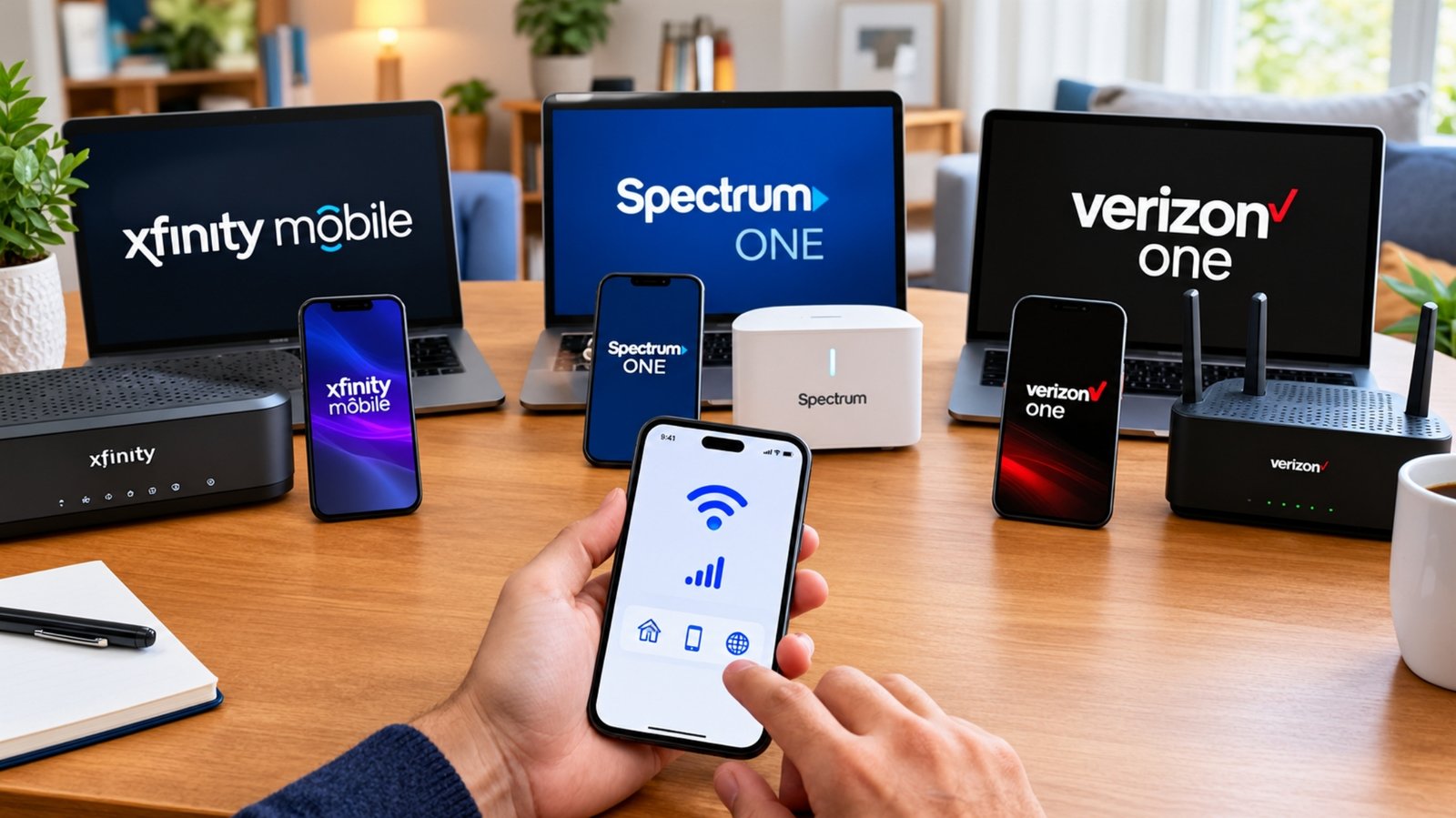


Here’s something a lot of families don’t realize: if you already receive Medicaid, SNAP, or WIC, you’ve probably already done the hard part of qualifying for cheap internet. These same benefits are the “golden keys” that unlock low-cost plans from major providers — often for $15 to $30 a month, sometimes less.
The catch is that each benefit unlocks different plans, and the rules aren’t always spelled out clearly. This guide makes it simple: we’ll show you exactly which plans accept Medicaid, SNAP, and WIC, what documents you’ll need, and how to apply step by step.
TL;DR — Quick Answer
Do Medicaid, SNAP, or WIC Actually Qualify Me?
Short answer: yes — at least one of them will. Internet providers use government benefits as proof that your household has a low income, so being enrolled in any of these usually skips the need for pay stubs or income paperwork. Here’s how each one works.
Strong
One of the most widely accepted benefits. Qualifies you for provider plans and the federal Lifeline discount.
Strong
Also widely accepted. Like Medicaid, it works for provider plans and federal Lifeline.
Provider only
Accepted by Xfinity, AT&T, and Verizon plans — but not federal Lifeline in most states.
A lot of websites lump WIC in with SNAP and Medicaid as if they’re identical for internet discounts. They’re not. WIC qualifies you for provider low-income plans like Internet Essentials, Access from AT&T, and Verizon Forward. But WIC is not a standard qualifier for the federal Lifeline program — only a few states (like California) include it. If you only have WIC, focus on the provider plans below. If you also have Medicaid or SNAP, you can add Lifeline on top.
Which Plans Accept Each Benefit?
This is the table to bookmark. Find the benefit you have, then look across to see which plans you qualify for, what they cost, and how fast they are.
| Plan | Medicaid | SNAP | WIC | Price | Speed |
|---|---|---|---|---|---|
| Xfinity Internet Essentials | ✓ | ✓ | ✓ | $14.95/mo | 75 Mbps |
| Access from AT&T | ✓ | ✓ | ✓ | $30/mo | Up to 100 Mbps |
| Verizon Forward | ✓ | ✓ | ✓ | Up to $30 off | Fios / 5G tiers |
| Cox Connect2Compete* | ✓ | ✓ | varies | $9.95/mo | 100 Mbps |
| Spectrum Internet Assist** | ✗ | ✗ | ✗ | $24.99/mo | 50 Mbps |
| Federal Lifeline | ✓ | ✓ | ✗ | −$9.25/mo | Discount only |
Cox Connect2Compete requires a K-12 student in the home plus a qualifying assistance program. **Spectrum Internet Assist uses different criteria — the National School Lunch Program, CEP, or SSI for seniors 65+ — rather than Medicaid, SNAP, or WIC. Prices are current 2026 figures and exclude taxes; confirm at your address.
The Best Plans You Can Qualify For
Now let’s look at the top plans in detail. We’ve put the one that accepts all three benefits — and costs the least with no credit check — first.
Xfinity Internet Essentials
Medicaid · SNAP · WIC all accepted
$14.95
/month · 75 MbpsSpeed up to 75 Mbps, Credit check none, SSN not required
- Accepts Medicaid, SNAP, WIC, Housing Assistance, SSI, and NSLP
- $14.95/mo for 75 Mbps; Internet Essentials Plus is 100 Mbps for $29.95/mo
- No credit check and no Social Security number needed to apply
- Option to buy a discounted laptop or Chromebook for $149.99
- Largest reach of any low-income plan — available in 40 states
Access from AT&T
Medicaid · SNAP · WIC accepted
$30
/month · up to 100 MbpsSpeed up to 100 Mbps, Data unlimited, Setup no fees
- Qualify with SNAP, Medicaid, WIC, SSI, Housing Assistance, or TANF
- Also qualifies on income at or below 200% of the poverty line
- No installation fee, no equipment fee, no annual contract
- Discounts also apply to faster AT&T fiber plans for eligible homes
- Available in 21 states
Verizon Forward
Medicaid · SNAP · WIC accepted
$30
/month off · Fios & 5GDiscount up to $30/mo, Plans Fios / 5G Home, Stackable yes
- Qualify with SNAP, WIC, Lifeline, Pell Grant, SSI, or income ≤200% poverty
- Up to $30/mo off Fios, 5G Home, or LTE Home plans
- Can be combined with Auto Pay and Mobile + Home discounts
- Now expanding to eligible Frontier Fiber customers too
- Must have qualified for a program within 180 days of applying
Cox Connect2Compete
Cheapest — for families with kids
$9.95
/month · 100 MbpsSpeed 100 Mbps, Price lowest here, Needs K-12 student
- Just $9.95/mo for 100 Mbps — the lowest price on this list
- For homes with a K-12 student who receive SNAP, TANF, or similar aid
- No deposit, no annual contract, free Wi-Fi modem
- No student at home? Cox ConnectAssist is $30/mo for 100 Mbps
- Available in 18+ states
Spectrum Internet Assist
Different rules — read carefully
$24.99
/month . 50 MbpsSpeed 50 Mbps, Modem free, Qualify NSLP / SSI
- Does not use Medicaid, SNAP, or WIC for eligibility
- Qualify through the National School Lunch Program or CEP
- Also open to seniors 65+ who receive SSI
- Free modem, no data caps; Advanced Wi-Fi is $5/mo extra
- Available in 41 states
Federal Lifeline
Medicaid & SNAP (not WIC)
$9.25
/month (discount)Discount $9.25/mo, Tribal $34.25/mo, Type federal program
- Qualify with Medicaid, SNAP, SSI, or income ≤135% of poverty line
- WIC is not a federal qualifier (only some states allow it)
- Apply it on top of a participating provider’s plan to save more
- One benefit per household; renew once a year
- Available in all 50 states
Not sure which plan your benefits unlock?
Call (855) 696-0156
What Documents Do You Need?
The good news: proving you qualify is usually quick. In most cases you just need one document that shows you’re enrolled in the benefit. Have a clear photo or scan ready before you start.
| If You Have… | Accepted Proof |
|---|---|
| Medicaid | Your Medicaid card or an approval/benefit letter (dated within the last year) |
| SNAP | Your EBT card, an award letter, or a recent benefit statement |
| WIC | Your WIC ID folder/card or an eligibility letter from your WIC clinic |
| Income only (no benefits) | A pay stub, prior-year tax return, or Social Security statement |
How to Apply, Step by Step
Not every provider serves every street. Check which of the plans above reach your home before you apply, so you don’t waste time.
Match your benefit to the table above. With Medicaid or SNAP you have the most choices; with WIC, focus on Xfinity, AT&T, or Verizon.
Take a clear photo of your benefit card or letter. Make sure your name and the date are easy to read.
Use the provider’s eligibility page or call the number on its card above. Many approvals happen the same day.
Apply for the federal $9.25 discount at lifelinesupport.org, then ask a participating provider to apply it for extra savings.
Benefits don’t have to be used on the same service. For example, you could put your Lifeline discount on your phone bill and use a provider plan like Internet Essentials for home internet. If you’re not sure how to combine them, your local library or your SNAP office can help — or call 211 for free guidance.
Final Recommendations
Qualifying is usually easier than people expect. Here’s the simplest path based on which benefit you have:
If you have Medicaid or SNAP
You have the most options. Start with Cox Connect2Compete ($9.95/mo, if you have a student) or Xfinity Internet Essentials ($14.95/mo), then add the Lifeline discount where it’s accepted.
If you only have WIC
Apply directly to Xfinity Internet Essentials, Access from AT&T, or Verizon Forward — all accept WIC. Skip Lifeline unless your state specifically allows WIC.
If you have a child in school
Cox Connect2Compete is the cheapest at $9.95/mo, and your child’s school may also offer a free hotspot through programs like T-Mobile Project 10Million.
Whatever you have
Keep one benefit document handy, confirm the plan reaches your address, and don’t be afraid to call and ask. Most approvals are fast, and you can often combine programs to save even more.
Your benefits already prove you qualify — the last step is just picking the right plan and applying. A few minutes of paperwork can mean affordable, reliable internet for your whole household.
Frequently Asked Questions
Yes — for provider plans. WIC is accepted by Xfinity Internet Essentials, Access from AT&T, and Verizon Forward, among others. However, WIC is not a standard qualifier for the federal Lifeline discount; only a few states include it. So if WIC is your only benefit, apply directly to one of those provider plans rather than to Lifeline.
With Medicaid, your cheapest options are usually Cox Connect2Compete ($9.95/mo, if you have a K-12 student) or Xfinity Internet Essentials ($14.95/mo). Medicaid also qualifies you for the federal Lifeline discount, so you can stack the $9.25 credit on a participating plan to lower your bill even further.
Often, no. Xfinity Internet Essentials does not require a Social Security number or a credit check, and several other low-income plans skip the credit check too. Eligibility is based on your benefit enrollment or income, not your credit history. Ask each provider what they accept if you’re unsure.
It varies. Many provider plans approve you the same day if your benefit can be verified electronically. If you need to upload a document, it usually takes 1–2 business days. Federal Lifeline approvals generally take 1–5 business days through the National Verifier.
For a single internet plan, yes — the discount applies to the household’s service, not to each person. But for Lifeline, only one benefit is allowed per household, and “household” means everyone who lives together and shares money, even if you’re not related.
You still have options. Look at low-cost standard plans like Xfinity NOW ($30/mo) or T-Mobile 5G Home ($50/mo), buy your own modem to skip rental fees, and call your provider’s retention line to ask for a better rate. Public libraries also lend free hotspots in many areas.
No. Signing up for a low-cost internet plan or the Lifeline discount does not reduce or affect your Medicaid, SNAP, WIC, or any other benefit. These internet programs simply use your existing enrollment as proof of eligibility — they don’t touch the benefits themselves.
Last updated June 2026. Eligibility rules, prices, speeds, and availability vary by location and provider and are subject to change. WIC is accepted by many provider programs but is not a standard federal Lifeline qualifier outside select states. Always confirm current eligibility directly with each provider and with official sources such as lifelinesupport.org and your state benefits office. This guide is for informational purposes only and does not constitute financial or legal advice.