
TL;DR:
Why Your Credit Score Shouldn’t Determine Your Internet Access
Let’s be real: getting rejected for internet service because of your credit score is frustrating. Maybe you’re just starting out and haven’t built credit yet. Maybe you hit some rough patches financially. Or maybe you just don’t want companies running your credit report every time you need a basic utility. Whatever your situation, it shouldn’t stop you from getting online.
The good news? In 2025, more internet providers than ever are offering prepaid home internet plans that skip the credit check entirely. These aren’t sketchy, slow connections either—we’re talking legitimate high-speed internet from major carriers like T-Mobile, Verizon, and Xfinity. Most of these plans offer the same speeds as their traditional counterparts, just without the paperwork, deposits, or credit inquiries.
What is Prepaid Internet?
Prepaid internet works like a pay-as-you-go phone plan. You pay upfront for a month of service, and there’s no long-term commitment. If you don’t pay next month? Service stops, but you don’t owe anything. No collections, no credit damage, just simple month-to-month flexibility.
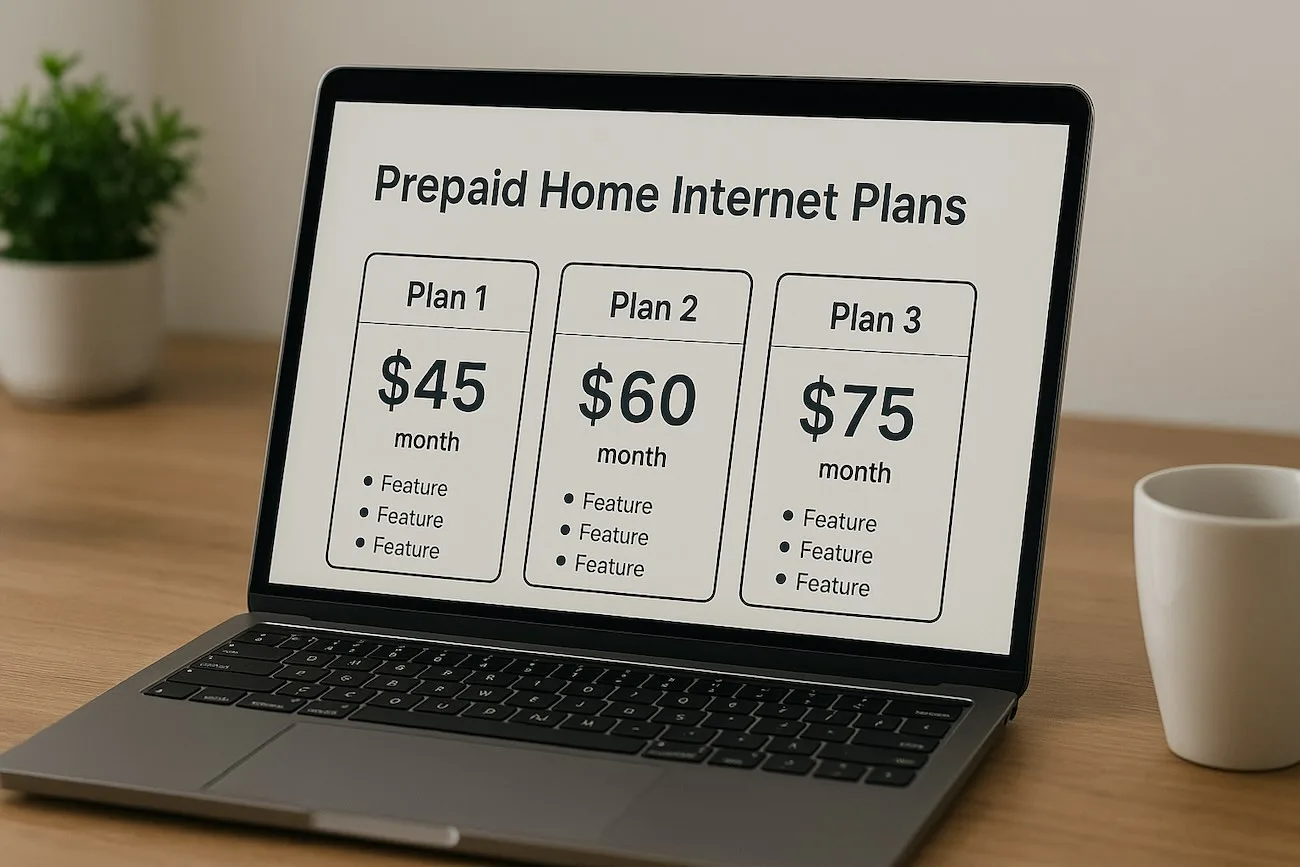
Best Prepaid Home Internet Plans (No Credit Check)
T-Mobile 5G Home
$50
/month134-415 Mbps (avg)
- No credit check required
- Free 5G gateway (modem + router)
- Unlimited data—seriously unlimited
- No installation fees or technician visits
- 15-day money-back trial
- 5-year price guarantee
- $35/mo with qualifying voice line
PREPAID
NOW Internet (Xfinity)
$30
/month100 Mbps
- Zero credit checks or deposits
- Free refurbished gateway equipment
- Unlimited data included
- Easy self-installation
- Cancel anytime online
- Pause service when you don’t need it
- 200 Mbps plan available for $45/mo
Verizon 5G Home
$60
/month85-1,000 Mbps
- No credit check with prepaid option
- Free Wi-Fi 6 or Wi-Fi 7 gateway
- Up to 1 Gbps on Ultimate plan ($75/mo)
- 30-day money-back guarantee
- Price guarantee for 3-5 years
- $35/mo with Verizon mobile plan
- Up to $500 ETF buyout
Total by Verizon Home
$55
/monthUp to 200 Mbps
- True prepaid—no credit check
- Unlimited high-speed data
- No data caps or throttling
- $45/mo with qualifying voice line
- 5G Gateway ($99.99 one-time)
- Month-to-month flexibility
- Uses Verizon’s 5G network
CenturyLink Prepay
$55
/month100 Mbps
- No credit check with prepay option
- No annual contract required
- Prepay with debit or credit card
- Managed WiFi with advanced security
- Paperless billing discount available
- Fiber and DSL options
- Month-to-month service
AT&T Internet Air
$47
/monthUp to 225 Mbps
- Fixed wireless—no wires needed
- Unlimited data included
- No equipment fees
- No installation charges
- $47/mo when bundled with wireless
- No annual contract
- ActiveArmor security included
Quantum Fiber Prepay
$50
/month500 Mbps
- Zero credit checks or deposits
- Month-to-month service
- Unlimited data on all plans
- 360 WiFi with WiFi 7 technology
- Multi-gig speeds available
- Built-in parental controls
- No annual contracts
Metro by T-Mobile Home
$50
/monthVariable (5G)
- No credit check or deposit
- 5G Home Internet connection
- 14-day trial period
- 5-year price guarantee
- Router purchase required ($99)
- No annual contract
- Powered by T-Mobile network
No Credit Check Internet Plans Comparison
| Provider | Monthly Cost | Speed Range | Credit Check | Contract | Equipment |
|---|---|---|---|---|---|
| T-Mobile 5G Home | $35-70/mo | 134-415 Mbps | No | None | Free gateway |
| NOW Internet (Xfinity) | $30-45/mo | 100-200 Mbps | No | None | Free (refurb) |
| Verizon 5G Home | $35-75/mo | 85-1,000 Mbps | No (prepaid) | None | Free gateway |
| Total by Verizon | $45-55/mo | Up to 200 Mbps | No | None | $99.99 one-time |
| CenturyLink Prepay | $55+/mo | 100-940 Mbps | No | None | Included |
| AT&T Internet Air | $47-60/mo | Up to 225 Mbps | No | None | Free gateway |
| Quantum Fiber | $50+/mo | 200-940 Mbps | No | None | Included |
| Metro by T-Mobile | $50/mo | Variable 5G | No | None | $99 purchase |
Why Choose Prepaid Home Internet?
Prepaid internet isn’t just for people with credit issues—it’s actually a smart choice for a lot of situations. Here’s why more people are choosing prepaid over traditional internet plans:
No Credit Check
Your credit history stays private. Whether you’re building credit, rebuilding it, or just don’t want another inquiry on your report, prepaid plans don’t require a credit check at all.
No Deposits
Traditional ISPs can charge deposits of $200-400 if you fail their credit check. With prepaid, you just pay for the first month and you’re good to go. No surprise upfront costs.
No Contracts
Pay month-to-month and cancel whenever you want. Perfect for temporary living situations, frequent movers, seasonal residents, or anyone who values flexibility over being locked in.
Predictable Pricing
What you see is what you pay. No surprise “promotional period ending” price hikes after 12 months. Most prepaid plans have transparent, locked-in pricing.
Fast Setup
Most prepaid plans ship you equipment for self-installation. No waiting days for a technician appointment. Plug it in, turn it on, and you’re online in minutes.
No Overage Fees
Nearly all prepaid home internet plans include unlimited data. No worrying about data caps, throttling, or surprise charges because you streamed too much Netflix.
Who Should Get Prepaid Internet?
Perfect for College Students
Most students don’t have established credit yet. Prepaid internet lets you get online for the semester without a credit check or deposit. When you graduate or move, just cancel—no early termination fees.
Ideal for Frequent Movers
Changing apartments every year? Renting short-term? Prepaid internet moves with you. With wireless options like T-Mobile and Verizon, you literally just unplug and take it to your next place.
Great for Seasonal Residents
Own a vacation home or RV? Many prepaid plans let you pause service during months you’re not there. Pay only for the internet you actually use, not year-round service you don’t need.
Smart for Credit Rebuilders
Rebuilding credit after financial difficulties? Prepaid internet lets you stay connected without another hard inquiry on your credit report or the risk of adding to your debt if times get tough.
Best for Side Gig Workers
Doing Airbnb? Running a pop-up? Need internet at a workshop space? Prepaid gives you professional-quality internet on your terms, not a cable company’s 12-month contract.
How Fast Should Your Prepaid Internet Be?
Just because it’s prepaid doesn’t mean you should settle for slow speeds. Here’s what different speeds actually mean for your daily internet use:
| Speed Tier | What You Can Do | Best For |
|---|---|---|
| 50-100 Mbps | Stream HD video, video calls, light gaming, browse social media | 1-2 people, basic use |
| 100-200 Mbps | Multiple HD streams, reliable video calls, casual gaming, smart home devices | 2-4 people, moderate use |
| 200-500 Mbps | 4K streaming, online gaming, large downloads, multiple devices simultaneously | 3-5 people, heavy use |
| 500-1,000 Mbps | Everything at once—multiple 4K streams, competitive gaming, massive downloads | 5+ people or power users |
Real Talk on Speeds
Most households don’t actually need gigabit internet. If you’re living alone or with one roommate and mainly browsing, streaming, and working from home, 100-200 Mbps is more than enough. Save your money and get a plan that fits your actual usage, not what sounds impressive.
Prepaid vs. Traditional Internet: The Real Differences
| Feature | Prepaid Internet | Traditional Internet |
|---|---|---|
| Credit Check | None required | Usually required (hard or soft) |
| Deposit | Never | Often $200-400 with poor credit |
| Contract | Month-to-month | Often 12-24 months |
| Cancellation | Cancel anytime, no fee | Early termination fee ($100-500) |
| Price Changes | Usually locked in | Often increases after 12 months |
| Installation | Usually self-install (free) | Often requires tech visit ($50-99) |
| Equipment | Included (free or one-time purchase) | Often rental fees ($10-15/mo) |
| Speed Options | Limited to what’s available prepaid | Full range of speeds |
Common Mistakes to Avoid
Not Checking Coverage First
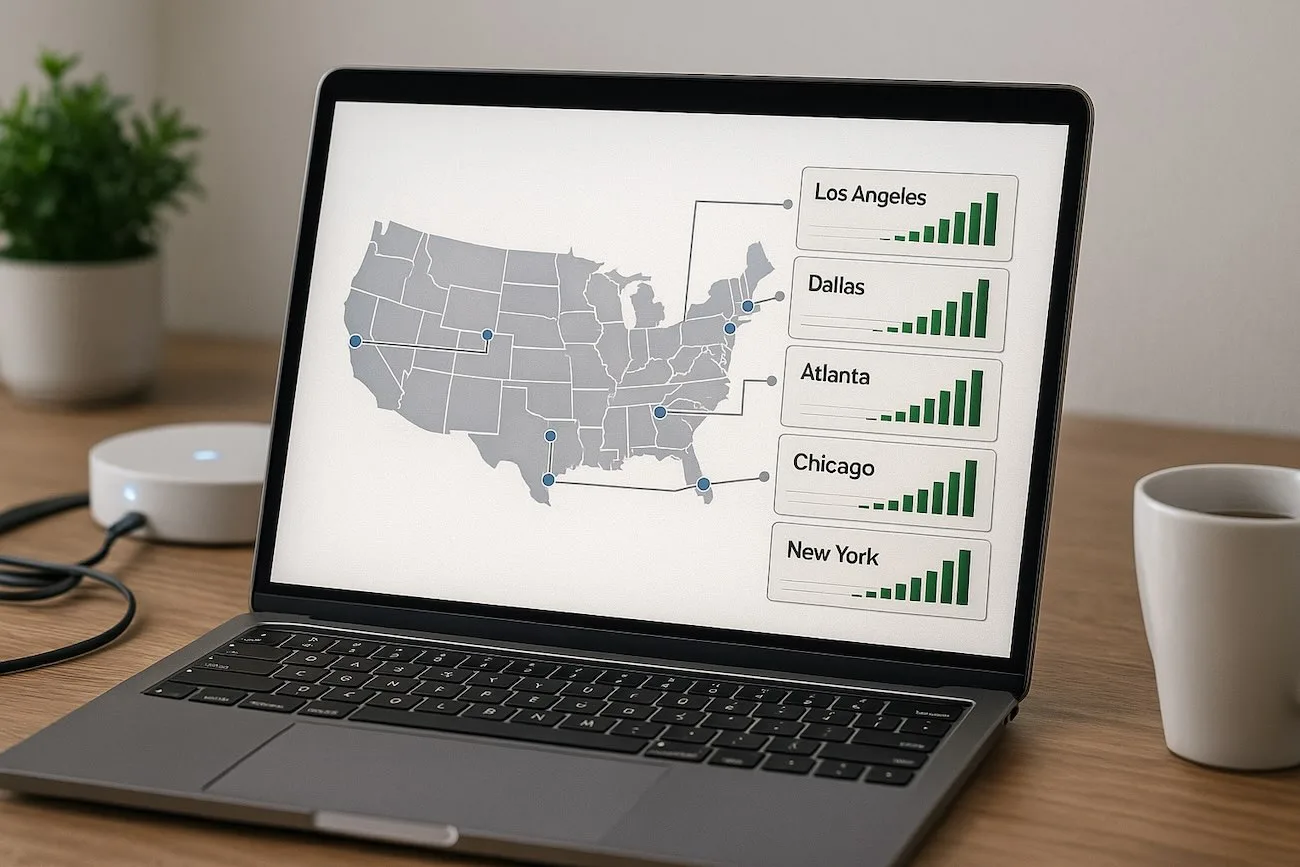
Wireless prepaid plans (T-Mobile, Verizon) depend on 5G coverage at your exact address. Don’t assume availability based on your city—check your specific address on the provider’s website before ordering. Getting equipment shipped only to find out you have no signal is frustrating.
Forgetting About Equipment Costs
While most prepaid plans include free equipment or let you rent it, some (like Metro by T-Mobile) require you to buy the router upfront ($99). Factor this into your total cost when comparing plans.
Ignoring Speed vs. Price Balance
The cheapest plan isn’t always the best deal. A $30/month plan with 50 Mbps might seem great until you realize it buffers constantly with two people streaming. Sometimes paying $10-15 more for better speeds is worth it.
Not Understanding “Unlimited” Data
While prepaid home internet plans advertise unlimited data, read the fine print. Some may deprioritize you during network congestion if you use over 1.2TB per month. For most households, this isn’t an issue, but if you’re a serious gamer or 4K streamer, be aware.
Missing Return Policies
Most providers offer 15-30 day money-back guarantees, but you must return equipment within that window or you’ll be charged. Test your service immediately after setup—don’t wait until day 29 to discover it doesn’t work well at your address.
Pro Tips for Prepaid Internet
Bundle for Savings
Both T-Mobile and Verizon offer $10-15/month discounts when you bundle home internet with a mobile phone plan. If you’re already a customer (or thinking of switching), the bundle savings can drop your home internet to $35-40/month.
Test During Your Trial Period
Most prepaid plans offer 15-30 day trials. Use this time to stress-test your connection. Stream on multiple devices, take video calls, game online—make sure it handles your actual usage before the return window closes.
Keep Your Equipment Ready to Return
Save all boxes and packing materials for at least 30 days. If you need to return equipment, having the original packaging makes it way easier and ensures you get your refund without equipment damage charges.
Use AutoPay for Better Pricing
Many prepaid plans offer their best pricing only with AutoPay enabled. T-Mobile, for example, charges $5-10 more per month without AutoPay. Set it up and save money—you can always cancel if needed.
Check for Seasonal Promotions
Prepaid internet providers run promotions, especially during back-to-school and holiday seasons. T-Mobile has offered up to $300 in rebates, and Verizon has done ETF buyouts up to $500. Time your signup right and save.
Consider Multi-Gig Plans If You Need Them
If you work from home and upload large video files or run servers, Quantum Fiber and other providers offer multi-gig prepaid plans (2-8 Gbps) without credit checks. These plans are pricier but necessary for specific use cases.
Frequently Asked Questions
Yes, in most cases. T-Mobile’s prepaid 5G home internet offers the same speeds (134-415 Mbps typical) as their postpaid service. NOW Internet by Xfinity uses the same Xfinity network infrastructure. Verizon’s prepaid options also match their regular 5G speeds. The technology is identical—the only difference is the payment structure and lack of credit check. You’re not sacrificing speed or reliability by going prepaid.
Absolutely. That’s the whole point of prepaid internet. None of the prepaid providers listed here run credit checks. Whether you have a 500 credit score, an 800 credit score, or no credit history at all makes zero difference. You pay upfront, so the provider takes no risk, and your credit is irrelevant. This is especially helpful for students, immigrants new to the US, or anyone rebuilding their credit.
Low-income programs (like Xfinity Internet Essentials or AT&T Access) require you to qualify based on participation in government assistance programs like SNAP, Medicaid, or Pell Grants. They offer deeply discounted rates ($10-30/month) but you must prove eligibility. Prepaid internet has no eligibility requirements beyond paying upfront—anyone can get it regardless of income. However, prepaid plans typically cost more ($30-70/month) than low-income programs.
Most prepaid home internet plans include truly unlimited data with no hard caps. However, some providers may deprioritize your traffic during times of network congestion if you use extremely high amounts (typically over 1-1.2TB per month). For context, that’s about 300 hours of HD video streaming—most households use 300-600GB monthly. Unless you’re streaming 4K 24/7 or running a home server, you won’t hit these thresholds. Regular streaming, gaming, and work-from-home use is completely fine.
Depends on the type of service. Wireless prepaid plans (T-Mobile 5G Home, Verizon 5G Home) are completely portable—just unplug your gateway and take it to your new address, as long as there’s coverage there. Cable-based prepaid (like NOW Internet) requires you to transfer service to your new address within the same service area. If you move outside the coverage area, you’ll need to cancel and potentially find a new provider. This portability is one of the biggest advantages of wireless home internet.
Most prepaid plans include free equipment. T-Mobile provides a free 5G gateway (combined modem/router). NOW Internet includes a refurbished gateway at no charge. Verizon includes their gateway free with 5G Home plans. A few exceptions: Metro by T-Mobile requires you to purchase their router upfront for $99, and Total by Verizon charges $99.99 for their gateway. Always check what’s included before signing up to avoid surprise costs.
Your service simply stops. That’s it. No collections calls, no debt, no impact on your credit report. With prepaid internet, you pay before you use the service, not after. If you don’t pay for the next month, your connection is disconnected. Most providers give you a few days of grace period before cutting you off completely. When you’re ready to restart, just pay again and you’re back online. This is much less stressful than traditional contracts where missing a payment can lead to collections and credit damage.
Prepaid internet is generally more transparent than traditional plans, but watch for these potential costs: taxes and fees (T-Mobile now charges these separately on new accounts, though some older accounts still have them included), unreturned equipment fees if you don’t send back the gateway when you cancel (typically $100-150), and in rare cases, a one-time activation or shipping fee. Always ask for the total out-the-door cost, including taxes, before signing up. Most prepaid plans don’t have installation fees since you self-install.
Absolutely. Prepaid internet uses the same networks and technology as traditional plans. T-Mobile’s 5G Home typically delivers 150-400 Mbps, which easily handles video calls, VPNs, and large file uploads for remote work. Verizon’s 5G Home can reach up to 1 Gbps on the Ultimate plan—more than enough for competitive gaming with low latency. The key is choosing the right speed tier for your needs. A 100 Mbps plan handles one person working from home easily. If you have multiple remote workers or heavy gamers, go for 200+ Mbps plans.
Bottom Line
Your credit score shouldn’t be a barrier to getting online in 2025. Prepaid home internet has evolved from a niche option to a legitimate alternative to traditional service, offering the same speeds, reliability, and features—just without the credit checks, deposits, and long-term contracts.
If you value flexibility, hate being locked into contracts, or simply don’t want companies digging into your credit history, prepaid internet makes sense. The best part? You’re not sacrificing quality for convenience. Providers like T-Mobile, Verizon, and Xfinity offer prepaid plans that perform just as well as their traditional counterparts.
The sweet spot for most people is T-Mobile 5G Home Internet at $50/month (or $35 with a mobile plan). You get solid speeds, unlimited data, no credit check, and incredible flexibility. If T-Mobile’s not available at your address, NOW Internet by Xfinity provides reliable cable internet starting at just $30/month prepaid. And if you need the absolute fastest speeds, Verizon 5G Home Ultimate offers up to 1 Gbps without requiring a credit check.
Quick Recommendation
Start by checking if T-Mobile 5G Home or Verizon 5G Home are available at your exact address. Wireless home internet is usually the easiest prepaid option—free equipment, self-installation, and true portability. If neither works at your location, NOW Internet by Xfinity is available in most areas and offers solid performance at budget-friendly prices. Don’t overthink it: pick a plan with enough speed for your household, test it during the trial period, and if it works, you’re done. No credit check, no contract, no stress.
Disclaimer: Last updated November 2025. Pricing, availability, and plan details are subject to change. Always verify current offers, speeds, and coverage directly with providers before signing up. Some providers may have regional variations in pricing and features.