
For landlords and short-term rental hosts, Wi-Fi has quietly become the most important utility you provide. Surveys now show roughly 9 in 10 renters won’t sign a lease without good internet, and for Airbnb guests, “fast Wi-Fi” is the single most searched-for amenity — ahead of parking and even a full kitchen. Slow or flaky internet is one of the top reasons guests leave a bad review.
The challenge is that managing internet across rental units or vacation properties is different from setting up Wi-Fi in your own home. You’re dealing with guests you don’t know, devices you can’t see, billing decisions, and security risks. This guide breaks down the best options for 2026 — whether you run one Airbnb or a whole apartment building.
TL;DR — Quick Answer
First, Pick Your Path
Before choosing a plan, figure out which kind of landlord you are. The right setup is completely different for a single vacation rental versus a building full of long-term tenants.
Airbnb / Vrbo
One unit at a time, new guests every few days. You want plug-and-play reliability, a secure guest network, and the ability to fix problems remotely. A good business or fiber plan plus a smart mesh router does the job.
Multifamily / MDU
Several apartments or a whole building. Here, bulk “managed Wi-Fi” shines — one property-wide network, instant activation for new tenants, and a single bill. Lower per-unit cost, but more setup and commitment.
Best Internet Options for Landlords in 2026
We’ve ranked the major providers by how well they serve rental properties. The first is built for multi-unit buildings; the rest cover everything from single Airbnbs to small multifamily setups.
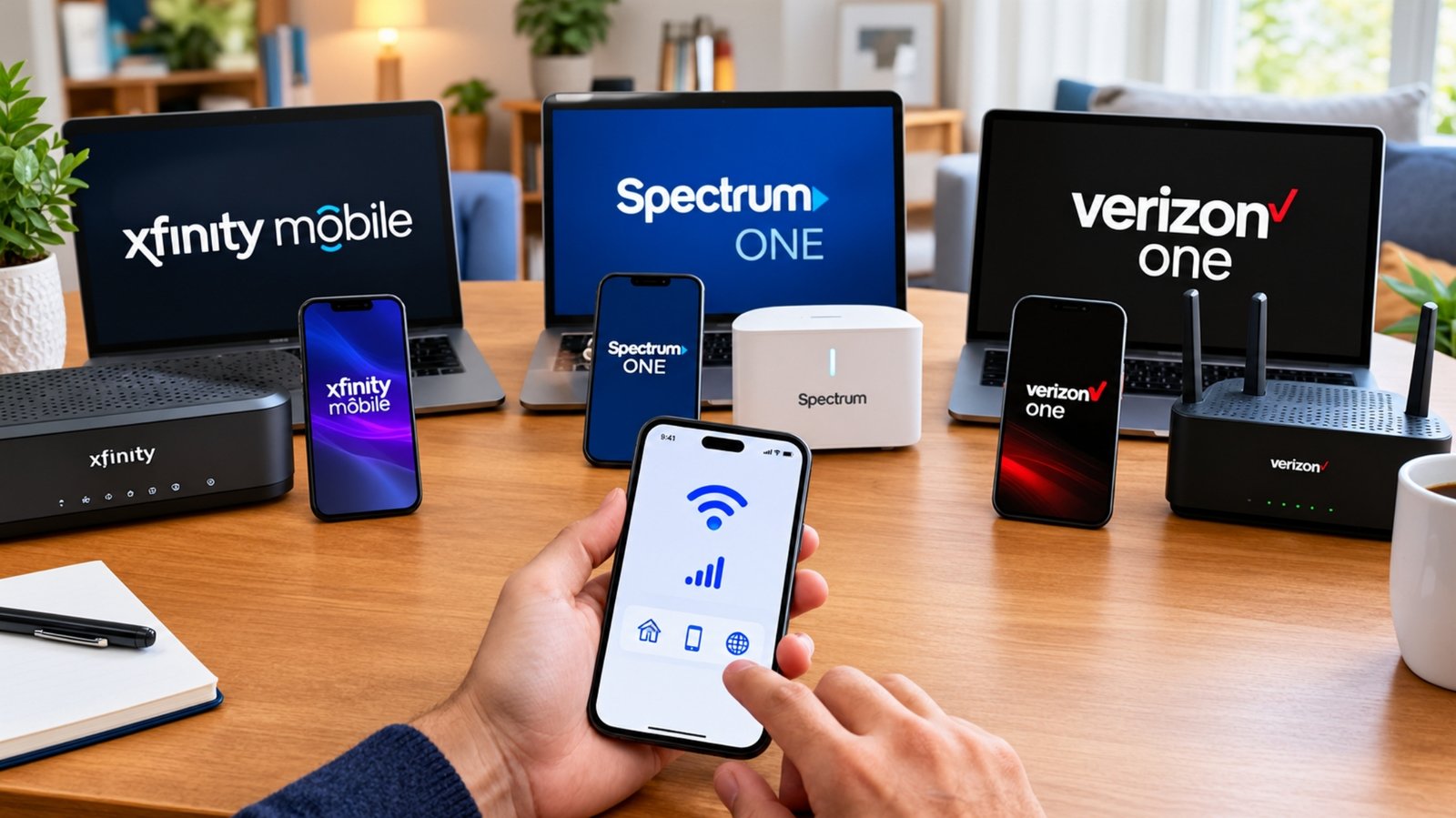
Xfinity Communities
Connected Building — property-wide managed Wi-Fi
Custom
/bulk quoteSetup property-wide, Best for apartments, Type managed Wi-Fi
- “Connected Building” delivers always-on, building-wide Wi-Fi from a single gateway
- Retrofit-friendly Multifamily Gateway works in older buildings, not just new builds
- Instant activation for new tenants — no per-unit install appointments
- Powers smart locks, cameras, and IoT in common areas and between tenants
- Priced lower than traditional managed-Wi-Fi vendors; available nationwide
Spectrum Community Solutions
Bulk Wi-Fi with instant move-in
Custom
/bulk quoteSetup bulk / MDU, Reach 41 states, Type managed Wi-Fi
- “Spectrum Ready” gives tenants instant internet the moment they move in
- Multi-gig symmetrical speeds over fiber or existing coax
- Exclusive Marketing Agreements can create revenue for property owners
- 24/7 dedicated resident support takes tech calls off your plate
- Works for apartments, condos, senior and student housing
AT&T Business Fiber
Best for single Airbnbs
$70
/month · 300 MbpsSpeed 300 Mbps–5 Gig, Upload symmetrical, Type business fiber
- Symmetrical fiber — fast uploads for guests on work calls and cloud apps
- No data caps; great for guest streaming without overage worries
- Business-grade reliability and priority support if something breaks
- Static IP options for cameras and smart-home gear
- Ideal for one or two vacation rentals where fiber is available
Cox Business
Business + MDU options
$70
/monthSpeed up to 2 Gbps, Support 24/7, Type business / MDU
- Business plans for single rentals plus bulk solutions for buildings
- Cox fiber addresses offer symmetrical multi-gig speeds
- Managed Wi-Fi and smart-community options for property owners
- 24/7 business support and optional service-level guarantees
- Available in 18+ states
Verizon Business
Fios & 5G for rentals
$35
/month · startingSpeed Fios / 5G, Upload symmetrical (Fios), Type fiber / wireless
- Fios Business fiber where available — fast, symmetrical, reliable
- 5G Business Internet for units fiber hasn’t reached yet
- Fixed-wireless options being deployed for some apartment buildings
- No annual contract on many 5G plans; quick self-setup
- Strong fit for Northeast rentals and single STRs
T-Mobile 5G Business
Best for remote or quick setups
$70
/month · startingSpeed 87–415 Mbps, Setup 15 min, Type 5G wireless
- Plug-and-play — perfect for cabins, rural rentals, or fast turnarounds
- No contract, no equipment fees, free gateway included
- Great as a backup line so guests are never fully offline
- Manage and monitor remotely through the app
- Available nationwide in all 50 states
Managing Wi-Fi across multiple properties?
Call (855) 696-0156
Quick Comparison: Which Option Fits Your Property?
| Option | Best For | Type | Starting Cost |
|---|---|---|---|
| Xfinity Communities | Apartment buildings, condos | Bulk managed Wi-Fi | Custom quote |
| Spectrum Community Solutions | Multifamily, student/senior housing | Bulk managed Wi-Fi | Custom quote |
| AT&T Business Fiber | Single Airbnbs, small multifamily | Business fiber | From ~$70/mo |
| Cox Business | Single units or buildings | Business / MDU | From ~$70/mo |
| Verizon Business | Northeast rentals, single STRs | Fiber / 5G | From ~$69/mo |
| T-Mobile 5G Business | Remote/rural rentals, backup | 5G wireless | From ~$50/mo |
Business and bulk pricing varies widely by location, property size, and contract terms. Treat the “starting cost” figures as rough anchors and request a quote for your exact address.
How Much Speed Does a Rental Need?
You don’t have to buy the biggest plan — you just need enough for the way guests actually use it. Streaming, video calls, and smart-home devices are the main draws on a rental’s connection.
| Property Type | Recommended Speed | Why |
|---|---|---|
| Studio / 1-bedroom STR | 100–200 Mbps | One or two guests streaming and working |
| Whole-house vacation rental | 300–500 Mbps | Several guests, multiple TVs, smart devices |
| Large luxury / group rental | 500 Mbps – 1 Gig | Many simultaneous streams and remote workers |
| Each unit in a multifamily building | 100–300 Mbps | Treat every unit like its own household |
| Building backbone (bulk) | Multi-gig fiber | Shared pipe feeding every unit at once |
Setting Up Secure Guest Wi-Fi (Don’t Skip This)
This is the part landlords get wrong most often. If guests join the same network as your security cameras, smart locks, or personal files, you’ve opened a serious security hole. Here’s the safe way to set it up.
Pick a business or fiber plan from above as your backbone. Reliability matters more than raw speed for keeping reviews high.
Add a mesh system like Eero, Google Nest, or Orbi. They cover dead zones and make guest networks and remote control easy.
This is the “digital wall” that blocks guests from your cameras, locks, and devices. Give it a clear name and a simple password.
Apps from Eero, Nest, and others let you reset the network, change the password, or check status without driving over.
For STRs, a tool like StayFi shows a welcome screen and can collect guest emails for direct-booking marketing.
Run Airbnb’s in-app speed test and post the result on your listing. Honest speeds build trust and head off bad reviews.
Who Pays for the Internet — and How?
For long-term rentals especially, you’ll need to decide how the cost is handled. There are three common approaches:
- Bake it into rent. The simplest option. Tenants love “internet included,” and you avoid a separate bill. Just price it in.
- Charge a separate technology fee. A clear line item that recovers your cost. Keep it at or below local retail so it feels fair.
- Buy in bulk and mark it up. With managed Wi-Fi, owners often get rates around 50% below retail, then add a modest markup. Done right, it covers your costs and can even turn a small profit.
Bulk Wi-Fi isn’t perfect. Some tenants dislike being forced onto a building network instead of choosing their own provider, and a few report weaker signal or privacy concerns for home businesses. Building the network can cost $300–$500 per unit, and the technology can age. For larger buildings the math usually works, but for just a few units, simple per-unit business plans are often easier and less risky.
Frequently Asked Questions
For most single short-term rentals, a strong residential fiber plan is perfectly fine — it’s cheaper and covers typical guest use. Business internet is worth it for larger or luxury properties, remote locations, or anyone managing multiple units who wants priority support, service guarantees, and features like static IPs. The bigger and busier the property, the more business-grade reliability pays off.
Aim for 100–200 Mbps for a studio or one-bedroom, 300–500 Mbps for a whole-house rental, and 500 Mbps or more for large group properties. In a multifamily building, treat each unit like its own household at 100–300 Mbps and feed them all with a multi-gig fiber backbone. Guests today expect at least 100 Mbps, and listings with great Wi-Fi earn noticeably more 5-star reviews.
Set up a separate, isolated guest network — a standard feature on any modern mesh router. Your private devices (cameras, locks, personal laptop) stay on your main network, while guests use a walled-off guest network that can’t see them. This single step is the most important security move any landlord or host can make.
Both work. Including it in rent is the simplest and most attractive to tenants. A separate technology fee keeps the cost transparent and recoverable. For buildings, a bulk agreement lets you buy at a discount and add a small markup. Whatever you choose, keep the tenant’s total at or below what they’d pay a provider directly, so it feels like a perk, not a penalty.
Managed Wi-Fi is one property-wide network the owner sets up for the whole building, instead of each tenant buying their own service. Products like Xfinity Communities Connected Building and Spectrum Community Solutions provide it. It offers instant move-in activation, lower per-unit cost, and a single point of contact. It’s usually worth it for larger buildings, but the upfront cost ($300–$500 per unit) and some tenant pushback mean it’s overkill for just a few units.
Yes. Mesh systems like Eero, Google Nest, and Orbi include apps that let you reset the network, change passwords, monitor usage, and pause access from anywhere. This is essential when you host remotely or run multiple properties — most issues can be fixed from your phone without a trip.
It’s a real concern, though rarely a problem in practice. To protect yourself, keep guests on an isolated guest network, consider basic content filtering (available on many routers or through services like Eero Plus), and include simple acceptable-use language in your house rules. This isn’t legal advice — if you have specific liability worries, check with a local attorney.
Last updated June 2026. Business and bulk internet pricing, speeds, features, and availability vary significantly by location, property size, and contract terms, and are subject to change. Starting-cost figures are approximate and should be confirmed with a provider quote for your address. This guide is for informational purposes only and does not constitute legal, financial, or tax advice; consult a qualified professional for liability or billing questions specific to your situation.