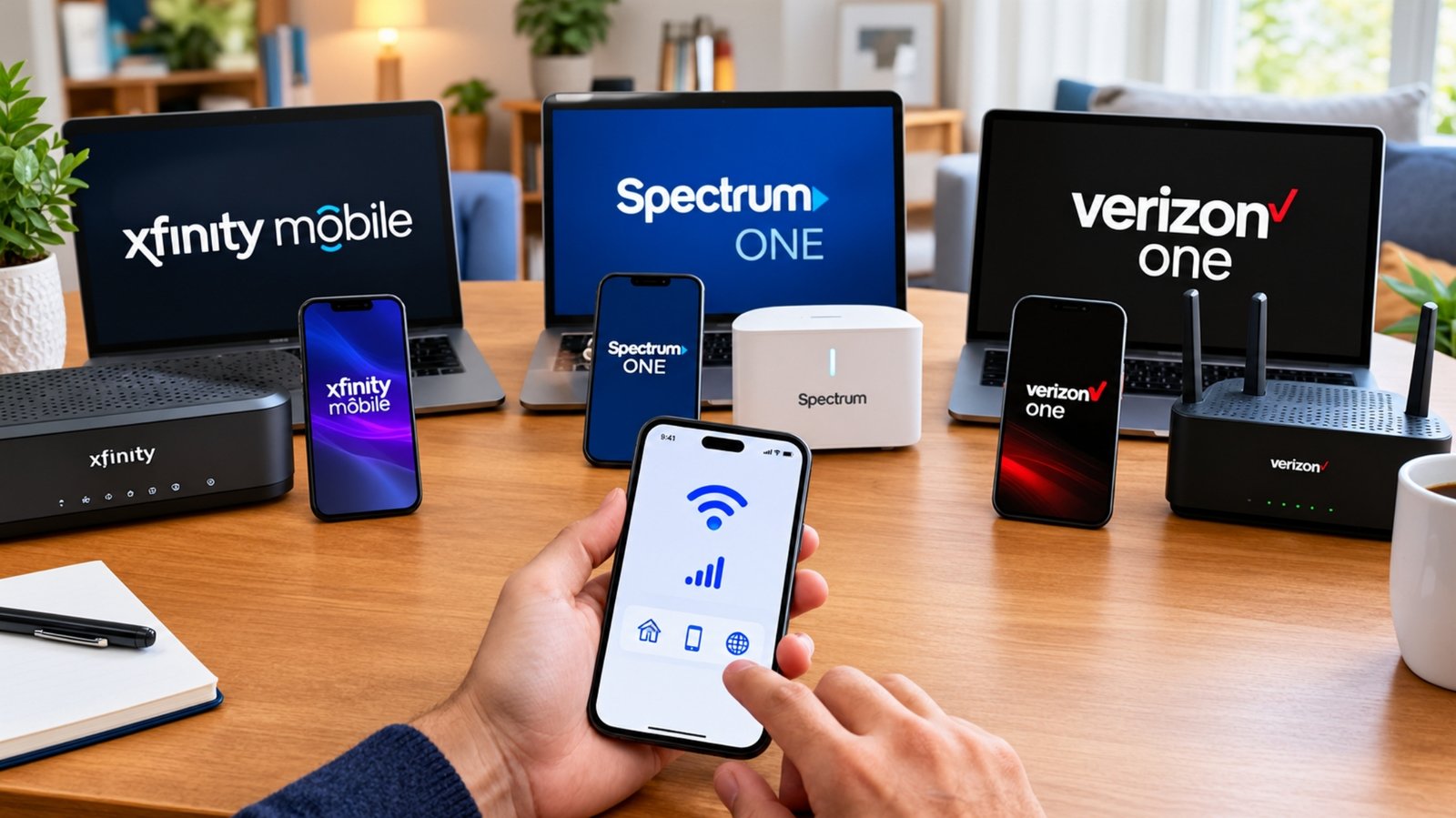


Living alone has one nice perk when it comes to internet: you don’t have to share. There’s no one else streaming 4K in the next room or downloading huge game files while you’re on a call. That means you can skip the expensive gigabit plans and pay for a small, cheap plan that fits exactly what one person uses.
The problem? Internet companies love to push you toward fast, pricey plans you’ll never fully use. This guide cuts through that. We’ll show you the cheapest internet plans for a single-person household in 2026, how little speed you actually need, and a few simple tricks to shrink your bill even further.
TL;DR — Quick Answer
How Much Speed Does One Person Really Need?
This is the most important question, and it’s the one providers hope you won’t ask. The honest answer: for one person, not much. Speed is shared across everything you do at once, and when you live alone, you’re rarely doing more than one or two things at a time.
Here’s a realistic look at what a single person uses:
| What You Do | Speed You Need | Notes |
|---|---|---|
| Email & web browsing | 5 – 10 Mbps | News, shopping, online banking, social media |
| One HD video call | 10 – 15 Mbps | Zoom, FaceTime, Teams with family or work |
| HD streaming (one screen) | 15 – 25 Mbps | Netflix, YouTube, Hulu in 1080p |
| 4K streaming | 25 – 50 Mbps | Ultra-HD on a smart TV |
| Everything above, comfortably | 50 – 100 Mbps | The sweet spot for one person with room to spare |
A 100 Mbps plan is plenty for almost any single person — even one who works from home and streams in 4K. If you only browse, email, and watch shows, you can drop to a 25–50 Mbps plan and save even more. You do not need 500 Mbps or a gigabit plan living by yourself.
Cheapest Internet Plans for One Person in 2026
We ranked these by real monthly cost — the price you actually pay after fees, not the asterisk-covered “from” number in the ad. The first two are the cheapest you’ll find from major providers, and both are perfect for a single, low-bandwidth household.
Xfinity NOW Internet
All-in price · no hidden fees
$30
/month · 100 MbpsSpeed 100 Mbps, Speed 100 Mbps included, Type Cable / prepaid
- Flat $30/mo — the price already includes Wi-Fi equipment and taxes
- No credit check and no annual contract
- No data caps (Xfinity dropped overage fees in late 2025)
- Plenty of speed for one person streaming, browsing, and calling
- Standard Xfinity plans start at $40/mo for 300 Mbps if you want more
- Available in 40 states — easy to actually get
Spectrum Internet Advantage
No caps, no contract
$30
/month· 100 MbpsSpeed 100 Mbps, Modem free, Type Cable
- $30/mo budget tier built for light, single-person use
- No data caps, ever — stream all you want
- No annual contract; free modem included
- Standard 300 Mbps plan is $50/mo if you outgrow it
- Available in 41 states
Cox
Budget tier for qualifying homes
$30
/month · 100 MbpsSpeed 100 Mbps, Setup no deposit, Type Cable
- ConnectAssist 100 Mbps at $30/mo for qualifying budget households
- No credit check, no deposit, no late fees
- Standard cheapest plan is $50/mo for 300 Mbps
- Free Panoramic Wi-Fi on many plans
- Available in 18+ states
Verizon Fios
Best cheap fiber
$49.99
/month· w/ AutoPaySpeed 300 Mbps, Upload matches download, Type Fiber
- Drops to $34.99/mo if you have a Verizon mobile plan
- Symmetrical fiber — fast upload and download
- No data caps, no contract, router included
- 3-year price-lock guarantee on new plans
- Available in ~9 Northeast states + Washington, D.C.
T-Mobile 5G Home
Easiest setup, flat price
$50
/month · w/ AutoPaySpeed 87–415 Mbps, Fees none, Type 5G wireless
- Flat price with no equipment fees and no surprise add-ons
- 5-year price guarantee — the bill won’t creep up
- No contract, no data caps; free gateway included
- Plug-and-play setup in 15 minutes, plus a 15-day free trial
- Available in all 50 states
AT&T Fiber
Most reliable budget fiber
$55
/month · 300 MbpsSpeed 300 Mbps, Upload matches download, Type Fiber
- As low as $35/mo when bundled with AT&T mobile
- Symmetrical fiber, no data caps, no contract
- Free router and free ActiveArmor security
- Top-rated for reliability and customer satisfaction
- Available in parts of 21 states
Want the cheapest plan at your exact address?
Call (855) 696-0156
Quick Comparison: Cheapest Plans Side by Side
Here’s every option ranked by real monthly price. Notice that you don’t have to spend much to cover everything one person does online.
| Provider | Monthly Price | Speed | Type | Why It’s Good for One Person |
|---|---|---|---|---|
| Xfinity NOW | $30/mo | 100 Mbps | Cable | All-in price, no fees, no credit check |
| Spectrum Advantage | $30/mo | 100 Mbps | Cable | No data caps, no contract, free modem |
| Cox ConnectAssist | $30/mo | 100 Mbps | Cable | No deposit or late fees (qualifying homes) |
| Verizon Fios | $49.99/mo | 300 Mbps | Fiber | Best value if you want fast, reliable fiber |
| T-Mobile 5G | $50/mo | 87–415 Mbps | Wireless | No fees, 5-yr price lock, easiest setup |
| AT&T Fiber | $55/mo | 300 Mbps | Fiber | Most reliable; $35/mo bundled with mobile |
Prices reflect current 2026 rates and vary by address. Budget tiers like Cox ConnectAssist have eligibility requirements. Always confirm the final price — including any equipment fee — for your home before signing up.
If Money Is Really Tight: Low-Income Programs
If you’re on a fixed or low income, you may pay far less than the prices above. These programs are based on income or government assistance — not age — and they’re a lifeline for single-person households on a budget.
- Xfinity Internet Essentials — around $14.95/mo for qualifying households, no credit check.
- Spectrum Internet Assist — about $17.99/mo for those on SSI or certain assistance programs.
- Cox ConnectAssist — $30/mo with no deposit, no late fees, no credit check.
- AT&T Access — low-cost fiber for households that meet income guidelines.
- Federal Lifeline — a $9.25/mo discount ($34.25 on Tribal lands) you can apply to internet. Check eligibility at the official Lifeline support site.
You may still see old articles mention the Affordable Connectivity Program (ACP), which gave up to $30/month off your bill. That program ended in June 2024 when its funding ran out. The programs listed above are still active, and Lifeline continues to operate — so don’t count on the ACP coming back.
Smart Ways to Lower Your Bill Even More
A cheap plan is a great start, but a few simple habits can shave even more off your monthly cost:
- Buy your own modem/router. Rental fees run $10–15/month. A $60–80 modem pays for itself in under a year — though plans like Xfinity NOW and T-Mobile already include equipment free.
- Turn on AutoPay and paperless billing. Many providers knock $5–10/month off just for this.
- Skip the speed you won’t use. Dropping from a 500 Mbps plan to 100 Mbps can save $20+/month and you’ll never notice the difference living alone.
- Call before your promo ends. Promo rates often jump after 12 months. Set a reminder, call the “retention” department, and ask for a better rate or threaten (politely) to switch.
- Consider a prepaid or no-contract plan. These avoid credit checks and let you leave anytime, which is ideal if you move often or rent.
- Could your phone be enough? If you barely use home internet, a phone hotspot or a prepaid mobile plan might cover you for less.
When your promo rate expires, call and ask for the “loyalty” or “retention” team — not regular support. They have the power to offer real discounts. Mention a competitor’s price and you’ll often get matched or beaten on the spot.
Final Recommendations
Choosing a budget plan as a single person comes down to what’s available where you live and how much you actually use. Here’s our simple advice:
Go with Xfinity NOW Internet ($30/mo, 100 Mbps) or Spectrum Internet Advantage ($30/mo, 100 Mbps). Both cover everything one person does online, with no contract and no surprise fees.
Choose Verizon Fios ($49.99/mo, or $34.99 bundled). Symmetrical fiber that’s quick and reliable — worth the small step up if it’s available.
Pick T-Mobile 5G Home ($50/mo flat). No equipment fees, a 5-year price lock, and a 15-day trial so you can test the signal at your desk before committing.
Apply for a low-income program like Xfinity Internet Essentials ($14.95/mo) or Cox ConnectAssist ($30/mo), and stack the federal Lifeline discount if you qualify.
The golden rule for living alone: don’t pay for speed you’ll never use. Match a small, cheap plan to your real habits, turn on AutoPay, and call once a year to keep your rate low. That’s how you stay connected without overpaying.
Frequently Asked Questions
The cheapest mainstream plans in 2026 are Xfinity NOW Internet and Spectrum Internet Advantage, both around $30/month for 100 Mbps. Xfinity NOW is especially good for a single person because the price is all-in — no equipment fee and no credit check. If you qualify for a low-income program, you may pay as little as $10–$20/month.
For one person, 25–100 Mbps is plenty. A 100 Mbps plan comfortably handles streaming, video calls, browsing, and even working from home. If you mostly browse and watch shows, you can drop to 25–50 Mbps and save more. Living alone, you almost never need 500 Mbps or gigabit speeds.
Yes. Prepaid plans like Xfinity NOW and providers like T-Mobile 5G Home, Spectrum, and Cox ConnectAssist offer no-contract service, and several skip the credit check entirely. These are perfect if you rent, move often, or just don’t want to be locked in. You can cancel anytime without an early-termination fee.
For very light users, sometimes yes. If you only check email, browse, and stream occasionally, a phone hotspot or an unlimited mobile plan can replace home internet. But hotspots can slow down after a data threshold and aren’t ideal for steady streaming or video calls. For most single-person households, a cheap $30 home plan is more reliable and often cheaper per gigabyte.
Usually because of add-on fees the ad leaves out — most commonly a $10–15/month equipment rental, plus taxes. That’s why “all-in” plans like Xfinity NOW ($30) and T-Mobile 5G ($50) can be a better deal than a plan with a lower sticker price but extra fees. Always ask for the total monthly cost, including equipment and taxes, before signing up.
Mostly no. Spectrum, T-Mobile, and AT&T Fiber have no data caps, and Xfinity dropped its overage fees in late 2025. That means you can stream and browse freely on these budget plans without worrying about extra charges. A single person rarely comes close to any cap anyway.
If you can get it, Verizon Fios 300 Mbps (from $49.99/mo, or $34.99 with a Verizon mobile plan) is the best value — it’s symmetrical fiber, so it’s fast and rock-solid. AT&T Fiber is just as reliable where available. Both cost a bit more than the $30 cable tiers but give you better quality and steadier pricing.
Last updated June 2026. All prices, plans, speeds, and availability are subject to change and vary by location. Budget and low-income tiers have eligibility requirements set by each provider. Promotional pricing may increase after the first year. Please verify current offers directly with each provider. This guide is for informational purposes only and does not constitute financial or legal advice.